
A home accessibility consultation is a practical conversation about how a person moves through a real space. It is not only a tour of the house, and it is not a reason to choose products before the daily problem is understood. A useful first visit connects the household’s priorities with the entrances, bathrooms, stairs, and transition points that affect everyday routines.
For homeowners in South Louisiana, the consultation can help organize questions about bathroom safety, tub access, wheelchair ramps, stair lifts, railings, and other accessibility modifications. The goal is to identify the most important obstacle, understand the people who use the home, and decide what information is needed before a recommendation can be made.
Start with the daily routine
The clearest place to begin is the part of the day that has become difficult. That might be stepping over a tub wall, reaching the front door from the driveway, moving between floors, or using a narrow transition while carrying a walker. Explain what happens now, what feels uncertain, and what outcome would make the routine easier.
It also helps to describe who uses the space. A solution for one person may still need to work for a spouse, children, guests, or a caregiver. If mobility equipment is involved, note the type of wheelchair, walker, cane, or transfer support used inside and outside the home. The consultation should consider the complete path, not an isolated fixture.
What the first visit may review
The exact review depends on the concern, but several practical details commonly shape the next step:
- Entry and exit routes: The path from parking or the sidewalk to the door, including landings, thresholds, turns, and available space.
- Bathroom movement: The route to the toilet, sink, tub, or shower, plus the places where support or easier entry may be helpful.
- Stairs and level changes: Stair shape, landing areas, nearby doors, transfer points, and how other household members use the same route.
- Doorways and transitions: Narrow areas, abrupt level changes, loose surfaces, or furniture that interrupts a frequently used path.
- Household priorities: The improvement that would provide the most useful change now and the concerns that can be planned for later.
Measurements and photographs may be taken so the layout can be reviewed accurately. A homeowner can take preliminary photos before the appointment, but those images should support the conversation rather than replace an on-site look at the full space.
How to prepare before the consultation
You do not need a finished design. A short list of questions is more useful than trying to select a specific model in advance. Write down the two or three routines that cause the most difficulty. If another family member or caregiver has important context, invite that person to join the conversation or share their notes.
Clear the immediate area enough for the entry, bathroom, or staircase to be viewed safely. Keep any mobility equipment used by the household available. If a project involves a shared property, rental, facility, or homeowners association, mention that early so the right decision-makers and property questions can be identified.
From observations to an improvement plan
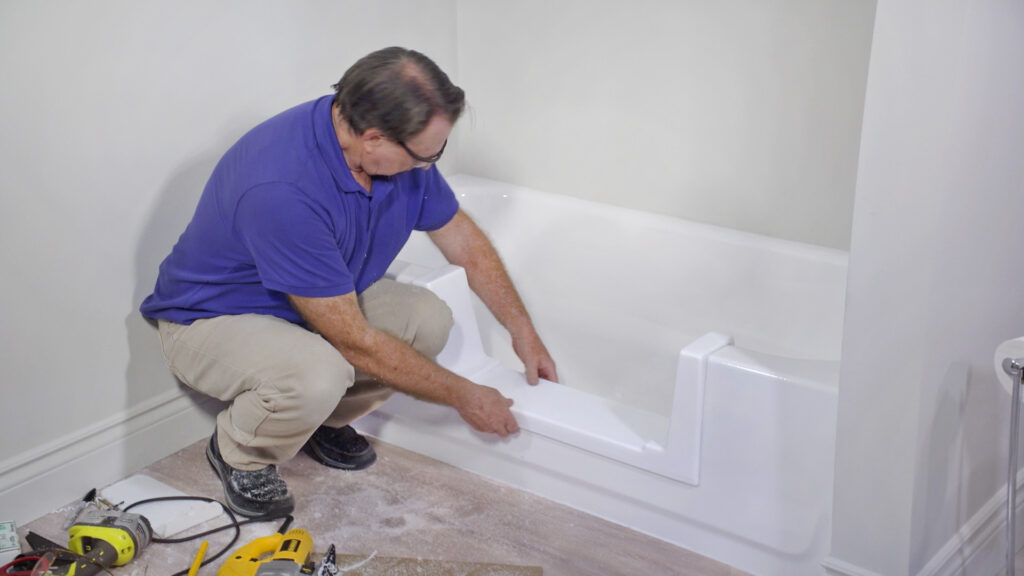
After the priorities and space are understood, the next step is to compare workable approaches. A bathroom concern might point toward a tub-to-walk-in conversion, support placement, refinishing, or a broader accessibility modification. An entry concern might require closer review of a wheelchair ramp route, landing, threshold, and connection to the driveway. A stair concern may require measurements and a discussion of safe boarding and exit points.
A good recommendation should explain what problem the work addresses and how it fits the household’s routine. It should also identify any unanswered questions. If several improvements are possible, ask which one is most important to complete first and whether later work should be considered in the current plan.
Questions worth asking
- Which part of this route creates the biggest daily obstacle?
- What information is still needed before an approach can be recommended?
- Will the improvement affect how other people use the room or entry?
- Can the work be organized in phases if more than one area needs attention?
- What should be moved or prepared before installation work begins?
- How will the completed work be reviewed with the household?
Keep the first step focused
The most useful consultation does not try to solve every future concern at once. It creates a clear starting point, documents the important conditions, and helps the homeowner understand the choices that deserve closer review.
If you are ready to discuss a bathroom, entry, stair, or mobility concern, request a Step Into Safety consultation. You can also review the company’s accessibility services and South Louisiana service area before the visit.